Rest Easy Knowing — Conversations on Death, Dying & End-of-Life
Listen on:
About the podcast
Rest Easy Knowing was born from a simple observation: most of us never talk about death, and many of us are unprepared when it arrives.
This podcast helps Australians learn about and discuss death and dying in a practical, helpful, and respectful way. By fostering open conversations and sharing practical information, we aim to ensure that people have a greater understanding of what to expect when it comes to end-of-life and consider how they might prepare for the inevitable.
We're recorded on Boonwurrung Country in Victoria, Australia, and we make this podcast for anyone who's ever wanted to ask a question about end-of-life and didn't know who to ask.
Browse
Find what you are looking for
View popular topics
Meet the host
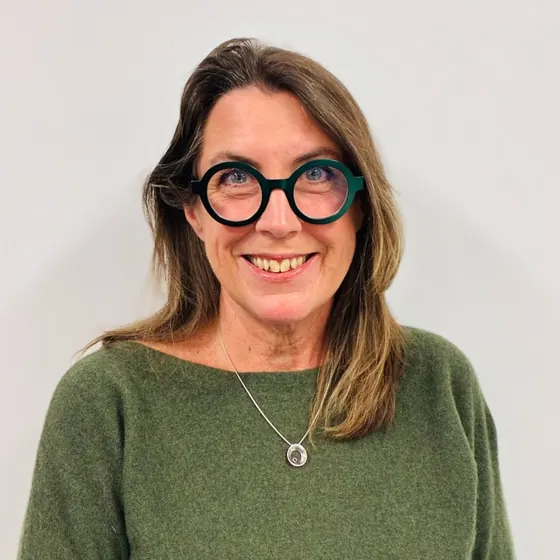
Fiona Healy
Fiona has spent her career working in impactful community initiatives — fostering meaningful relationships and driving positive societal change.
Her work reflects a dedication to empowering others and achieving tangible results within the community sector.
She created Rest Easy Knowing because she believes the conversations we avoid about death are often the ones that matter most.
Contact
Got a guest in mind, a question, or a story you'd like to share? We'd love to hear from you.
When Someone Dies: What Happens Next
We talk about what happens after someone dies with The Last Hurrah Funerals co-founder, Stass Jones. Who do you call? How quickly do decisions need to be made? Does the person always have to go straight to a funeral home? And how much choice do families really have? In this episode of Rest Easy Knowing, Fiona Healy sits down with Stass Jones, co-founder of The Last Hurrah, to demystify the practical and emotional realities that follow a death. Drawing on her experience supporting hundre...
Fiona: 00:04
Welcome to Rest Easy Knowing. This is a series about death and dying, and in this episode, we may touch on some detailed aspects of that experience. If this is a sensitive topic for you, listen with care or skip for now. Listener discretion is advised. Most of us are comfortable talking about death, but when it actually happens, many of us don't know where to turn. At the heart of it all is the simple truth: dignity matters. And more and more families want funerals that feel personal — thoughtful reflections of a lived life rather than something that's done by default. Today I'm speaking with Stass Jones, co-founder of The Last Hurrah Funerals in Thornbury. Stass, her business partner Kimber, and their team support families to farewell their loved ones in ways that are anything but cookie-cutter, creating ceremonies that feel honest, meaningful and deeply personal. Beyond funeral services, they also offer practical guidance, from sharing contact details for end-of-life doulas to information about DIY funeral care and help navigating burial and cremation. Because when someone dies, most of us are suddenly asking the same questions: Who do you call? What has to happen next? How quickly do decisions need to be made? And what choices do families actually have? Thanks for joining us today, Stass.
Stass:
Thanks so much for having me, Fiona. It's lovely to be here.
Fiona:
So you've worked across not-for-profit funeral care, forensic cleaning, and disaster response. How did you come to be here?
Stass: 01:45
Well, I studied psychology at uni and I've always kind of been leaning towards the more caring roles, whatever that may look like. I was a youth worker for a while, a pretend skateboarder for a while, and everything that I've done has been very much based in community and support, and that's where I've found a lot of comfort in my life. I also grew up being a goth, so I'm living the dream right now. I pretend I'm not a goth, but I am head to toe in black, so maybe I still am. But you know, it's a pretty special thing to do, and you see people at their absolute best. So working in a field where I get to do that every day is the best thing in the world. I couldn't imagine doing anything else now.
Fiona: 02:28
So as a young goth, did you imagine that you'd be working in this kind of area?
Stass: 02:33
Kind of. I always found death really interesting. I was never really scared of it. I grew up in New Zealand where, you know, even — I'm a Pākehā Kiwi and we bring our people home, and even my grandfather, who was traditionally Catholic, maybe not super pro-traditional Māori functions, he came home for three days, and that was a really beautiful thing to do. So we've never been close to death, but it's been around, and I've never had a fear of it, and I've always found it a way of bringing families together. And on my dad's side, our family funerals have been some of the best parties we've ever had, because it's one of the few times where everyone gets together, and some of them get pretty loose by the end of the day. But as hard as it is losing someone — and that's unfathomable in some instances — what it does to bring people together and bring out the best in people is really pretty cool. So being able to be a part of that process, little goth me is very happy about it.
Fiona: 03:32
Yeah, it sounds really rewarding.
Stass: 03:35
Yeah, very much so.
Fiona: 03:36
So what led you to establish The Last Hurrah?
Stass: 03:41
I worked for a traditional funeral home. They weren't for-profit, but they were traditional. And I didn't have as many tattoos then, but still they had to be hidden. I wasn't allowed to wear red lipstick, I had to wear these stupid silk scarves and an ill-fitting polyester uniform. You had to talk a certain way, say "loved one," and all the language was really odd. And funnily enough, I ended up getting bullied quite badly in that environment. So it was important to me to create a space where people could be themselves in the face of grief, in the way that we support people. Because people don't want something fake and pretend, like you're gatekeeping their person. They want something that feels normal. And it sounds like it's not an important thing, but we've had instances where family have called us and told us the situation they're in with losing someone, or someone dying rather, and if you respond with the F-word — obviously given the right audience — that can be so soothing, because so many people expect you to say "I'm sorry for your loss" or something kind of empty, but sometimes the F-word is all that will work when it's so real and so recognisable for the people you're speaking with.
Fiona: 04:49
You're talking their language.
Stass: 04:50
Absolutely, and you just hear them go, "Oh, yeah" — they're not being spoken down to. One thing I always say when I first talk to people is that we are looking after your person, so we'll be guided by you, which is tricky for some people, because the traditional "you go and do the things this way" can be really comforting, but I remind people that it's not our person — we have no power over these people, they're not ours. We're just caring for them for a short while, on their way out.
Fiona: 05:18
Yeah. Wow, there's a lot to think about there. Okay, I've got some questions I'll ask you as we progress, but let's start at the beginning. What happens after someone dies? What must happen legally and practically? What are the first steps?
Stass: 05:36
It really depends on the situation. Some people will have to go to the coroner's, and that's usually navigated by the police or the ambulance that attend the scene. They might call a GP — we've had instances where someone's died at home somewhat unexpectedly, but say they had a long-standing heart condition, and the doctor will say, "Yep, that's fine, I'll sign off on that," because that makes a lot of sense. Sometimes doctors are on holiday — I don't know what it is, but they love a holiday, they probably deserve one, let's be honest — but if they can't get onto someone who'll do the medical cause of death certificate, the person will have to go to the coroners. That's a process in itself and can take, you know, a week or so before their person is brought into the care of a funeral home.
Fiona: 06:20
And does that mean they're not officially dead until the family gets a death certificate? Is that how it works?
Stass: 06:27
They can't determine the cause of death in a straightforward way, so they'll go to the coroners. There are other instances too — like with CJD, with head injuries. If a footy player dies unexpectedly, they'll likely go to the coroners because that's being investigated at the moment. So there's a bunch of different reasons. Or if you've been in government-assisted housing, sometimes they'll have to go to the coroners too, depending on the situation and whether there's an inquiry underway. If they're at home and on palliative care support, or they've got a nurse or someone who can come out and do the verification of death — which just means confirming that the person is dead, such an important part of the process (I've had nightmares about it since we started this business, and it's never come up, thank God) — they'll do simple tests, like pinching the skin at the inside of the elbow and a few other things to make sure the person is actually deceased, and then we'll bring them into our care. The family might call us, palliative care might call us, but the most important thing at that time is that families don't feel rushed. It's the same in aged care or most hospitals — they won't rush you along, "quick, move out, we've got Nan needs to come in." Some will, and they shouldn't, but you can keep your person at home for a couple of hours. We can guide you on ways to keep the person cool, that's really important, or closing the windows because flies can be an issue. There's a lot we help with, and the most important thing I try to get across to families is that you don't need to feel rushed. If you want to be there, if you want to dress them at home — a lot of aged care staff will dress the person before they come into our care, for the family or with the family.
Fiona: 08:15
Amazing.
Stass: 08:15
And that's a really beautiful thing to do. And once they're with us, the family can be involved in the care of their person, because again, it's their person, it's not ours.
Fiona: 08:24
So how much involvement can the family have in that care?
Stass: 08:29
As much as they want. There's really no rules. In Victoria — I think in New South Wales you can only keep a person at home for a couple of days — but in Victoria there are no rules. If someone's going back into the home after coming into our care, we'd recommend embalming, because that'll make sure they're looking nice — and sorry if you're having lunch listening to this — but a big part of death is that it can be quite messy, fluids can come out of certain areas. But we've had people — one gentleman was amazing, he'd been looking after his mum at home for two months, and I said things might happen, and he said, "Of course they would, they've been happening for the last two months, and I'm happy to do it now — why would I stop straight away?" It's our role as funeral directors to guide people about what they can face, how we can try to protect them from that, and what they're comfortable taking on, knowing that at every step of the way things can change on an instant. So if someone decides "nope, I'm done," we can bring them into our care. You technically never have to go into the care of a funeral home if you don't want to — the industry is kind of designed to lead you towards a funeral director, but you don't have to. You can take your nan to the crematorium in your station wagon if you want. It's not easy, and people who do that are pretty amazing, especially at such a hard time. I don't know if this is good for business, but you don't need us — we can just support you in the parts that make it hard.
Fiona: 09:57
I was reading about the growth in deaths over the next twenty-five years and how significant that's going to be. I guess a variety of different services to suit different families' needs is what's required.
Stass: 10:16
Absolutely. And there's a lot of talk about, say — there was a terrible article in The Age about "briefcase operators." For some people, the whole shebang with a $50,000 coffin and a church and everything is perfect. And some people don't see the value in that — not "value," that's not the right way to put it. My own thoughts are that the way my family will live on is in their legacy and how they've affected the people around them. So that's what lives on — the care of the body itself isn't really important to me, because once they've died, that's not them.
Fiona: 10:45
Yeah.
Stass: 10:46
So there's a place for people who'll just whisk them away — a lot of people say "chuck me in a box and put me in the bin." That doesn't happen. But there's a place for those who want something less formal — you can do it online, and that's fine if it works for some people. It won't work for everyone, but there are enough people doing enough different things for everyone to be supported in whatever they see fit. And I think that's really important. It's not our role to tell people how they should care for their person, at all.
Fiona: 11:09
I was reading that more and more people are moving away from traditional-style funerals and looking for the kind of heartfelt service that you guys offer.
Stass: 11:21
Yeah. And it's still quite traditional, in a way. You go to a service — ours generally start with a glass of bubbles, that helps — but you've still got the traditional elements: people who loved the person get up and speak, you've got a photo presentation, you've got music they loved, they're there in the casket or coffin, or they're there as ashes. There's still the traditional elements that provide comfort, but you can add in extras — we've had dance parties with lasers and smoke machines, we've been at the Tote with a Viking metal band. There's traditional elements within the less traditional elements, which is pretty special.
Fiona: 11:55
And what do you think that does for the people left behind, to have something so bespoke and true to the nature of the person who died?
Stass: 12:06
I think a big thing we always hear is that they're left feeling lighter. Because of who we are and how we roll, I'd say the primary people we care for are a lot younger, and within that, generally more unexpected, quite shocking circumstances. So it's our job to hold people through that time. That's why having something personal that really speaks to the person, and to the manner of death, matters — a big thing for us is we won't shy away from who the person really was. That can be pretty fun sometimes, but if someone struggled with mental health, if someone struggled with addiction, it's about taking away the shame from that — for them and for everyone who loved them — and especially with suicide, naming that, talking to the people who love them and reassuring them: not telling them how to feel, but acknowledging however they feel about how the end came, so that everyone can talk about it.
Fiona: 13:29
Yeah, definitely, and that's so important.
Stass: 13:30
We've got a few rules, I'd say, that we won't do a funeral now if a suicide isn't being spoken about. Of course there are ways around it, and special considerations, but we won't get up and lie. And when we made that decision, it felt really good, because everyone has a family story of someone who died unexpectedly, no one knows what happened, but everyone's assuming what happened, which is harder for people to grasp and make sense of, and then grieve fully.
Fiona: 13:46
And when you have a vacuum of information, that leaves space for people to make stuff up that's not real, right?
Stass: 13:51
Absolutely, and you always think the worst, you always scandalise things a bit — it's just how humans are. So if you can speak about it honestly and beautifully — we've had families who've experienced the most profound loss speak about it in such a way that we never could. It's just amazing.
Fiona: 14:12
I've got a question about the logistics.
Stass: 14:14
I love logistics, it's where I shine.
Fiona: 14:17
So I know that you've got a beautiful hearse. When someone dies and the body gets taken across to you, do they go in the hearse, or some other kind of transport?
Stass: 14:31
We've just started our own transfer company. When we first started, we started with a projector and a screen, and now we're here, which is mind-blowing. But we've started doing our own transfers, where we'll go to people using an old hearse we've kind of blacked out. His name's Denny, he's a 1993 Ford, real slimy-looking — does the trick, he looks great, sleazy-uncle vibes, we love him. We send Denny out and we've trained up a team in our way of doing things. Prior to that, there are what you call transfer companies — they'll come to someone's home, or the hospital, or the coroner's, usually in a white or silver van. They usually dress like waiters, which is weird — always wearing a vest and a tie.
Fiona: 15:18
Yeah.
Stass: 15:18
I've had families say they were waiting for them to serve a cocktail. It's generally an unmarked vehicle, because the person needs to be covered — legally you're not meant to be able to see the person in the vehicle.
Fiona: 15:33
Yeah.
Stass: 15:34
Same with the hearse — for a funeral, if you've got someone on a shroud and bearer, wrapped on those beautiful timber bearers, that has to have a lid over it for transport, because heaven forbid someone sees someone.
Fiona: 15:47
And shrouded burial — is that new in Victoria, or how long has that been a possibility?
Stass: 15:54
It's always been a possibility. I know in Muslim practice it's really common, but now you can do it anywhere. It's really beautiful. We always recommend going more regional — in Melbourne, if you want to be buried in one of the major cemeteries, it's upwards of fifteen thousand dollars for a grave. You could buy a house for that. But if you go a little further out, there are natural burials that are just beautiful and so much cheaper. A lot of our families tend to go to the outer suburbs of Melbourne, like the Yarra Valley or the Dandenongs — there are some amazing spots, a lot around the goldfields. A lot of our families choose to go out there.
Fiona: 16:33
Amazing. And shrouded burials — do they go as deep?
Stass: 16:40
It depends. Natural burial in its purest form is a metre deep, a bit more shallow, which aids the decomposition process happening a bit faster, but you're still safe from foxes and wombats. You can't have embalming, and you can't have a plastic outfit or anything like that — it's all natural fibres. But there's a scale of natural burials, some places allow a casket, some do the standard six-foot burial but with natural surroundings. In the traditional sense, though, it's a metre deep.
Fiona: 17:16
I was at a doula conference recently where they were talking about tucking objects of importance into the shroud, and they discussed crystals — how that's great if the person's going to be buried, but if they're going to be cremated, it's probably not a good idea, because of the glass.
Stass: 17:40
Crystals actually haven't come up. But yeah, I wouldn't go with a huge one — a little crystal won't do any harm.
Fiona: 17:48
Are there common misunderstandings families have around timelines, or what must happen, or who has responsibility for what role?
Stass: 18:00
Timelines is a big one. We generally recommend at least a week and a half if you're doing a full funeral celebration, but someone can come into our care and be cremated the next day if you're not having a big shebang, because it's a lot of work to get done, and it often falls on one person to manage it all while in a really terrible state. But planning a funeral also has a function of keeping you busy and distracted during the worst time. There are no strict timeframes — we generally recommend a week and a half as a good amount of time, but not too long. Some people will have a private cremation and then something on a date of significance further down the line. There's no right or wrong way of doing things. With cremations, people often think either they can collect the person on the day or have to wait weeks — the process itself takes around three or four hours, but we can't get the ashes back until two or three days after.
Fiona: 19:01
I was speaking with another funeral provider who told me that one of the top questions they get asked is: are the ashes we receive back definitely the ashes of the person who died?
Stass: 19:16
Yeah, that's a big one. In Victoria it's all through a government trust, so it's heavily regulated. There's a little nameplate on the coffin that has to travel with the person at every step. And a big one I always get is: do they take the person out of the coffin for cremation, and can we sell it back to you? No — you have to be cremated in the coffin you're in, and you can't reuse a coffin, which is probably for the best.
Fiona: 19:45
And handles on coffins — do they come off, or do they stay on?
Stass: 19:53
They're usually painted plastic, so they're not metal — they'll just disintegrate.
Fiona: 19:59
So if you pick up a coffin with a body in it by the handles, is it strong enough?
Stass: 20:07
Absolutely. It doesn't make sense to me because they feel like pretty crappy plastic, but they're plenty strong enough. I'd say 90% of our services use cardboard caskets, and they've got rope handles, and they're absolutely fine — rated for 240 kilos, though I don't fully trust that, I wouldn't run the gauntlet there. Most of ours have timber handles, we very rarely use those traditional plasticky ones.
Fiona: 20:30
And the cardboard caskets — how much are they, what do they cost?
Stass: 20:36
We include them in our packages as the base option, because as I said, most people use that — they're $300, which is still kind of expensive for a cardboard box when you think about it. A lot of the alternatives for something simple are MDF that's kind of slapped together, so as a comparison, cardboard's a great option, it's simple, families love to draw on it and it can look so beautiful. But you also have to consider they come from South Africa, and there's a lot of water used in production — so while we love it and try to be as green as we can, we also acknowledge this industry isn't inherently, well, it's pretty wasteful. We also have a 1973 Cadillac hearse, which is particularly so. But we try to manage that where we can — there's a lot of faux-green narratives in the funeral industry.
Fiona: 21:28
Yeah, I used to live near a cemetery that had loads of olive trees, and it was olive season, and I was gathering the olives thinking I'd cure them. Then later I thought, "I wonder what's in the ground" — all those chemicals included in the caskets and whatnot. Probably best not to eat them.
Stass: 21:54
Yeah, thank you, embalmer. Well, I don't know if it's true, but I've been told this by several embalmers — though they're not unbiased, they've got a vested interest. The big buzzword around embalming is formaldehyde, but apparently once that meets a protein, it's neutralised and doesn't exist anymore. I've been trying to find scholarly articles on this and I can't — to be honest, I haven't looked that hard lately because I've been busy — but I think the bigger issue with burial would be the MDF and the plissé fabric — I don't know why, in 2026, they still have coffins with vintage-doll-style outfits, white lace and frills, that plasticky satin stuff. It looks like it should be on a 1900s doll. It's weird — all that plastic and chemicals in the production of that. We tend to use ones with calico lining instead, which is gorgeous. There's just traditional things that are always done and don't seem to change for so long. I don't think anyone's into plissé anymore.
Fiona: 23:00
Sounds like a good thing. So is there anything going on behind the scenes that you wish other people knew about, from your perspective?
Stass: 23:09
With funeral care, I think the main thing is that the person might be in the care of the funeral director, but they're your person. You've got a say over what happens to them. You should know what's happening, if you want to — if you don't want to know, they can do what they like. But the ownership of the person is the family's, and I think that's very much forgotten. Traditionally, the funeral industry has kind of gatekept the person, and I think that's really bad.
Fiona: 23:38
It works in their favour, doesn't it — to kind of have the "we've got all the knowledge"? Even with viewings, some people will be told, "oh no, you can't view someone," because of the manner of their death.
Stass: 23:53
And there's only been one instance in our seven-year history — god, that's gone fast — where we've said no, because it was a very significant case of decomposition and there was no way of making it safe for people to see this person. But quite often people who've been in an accident have grazes, and seeing their person with those grazes can actually be quite healing. It's not easy and it's really hard, but it's important we do our best if someone needs to see someone, especially in the instance of a sudden death, that they have that opportunity. Someone seeing their son will look past the grazes and imperfections just to see the boy who died so suddenly. So ownership of the person is the main thing I want people to know they have, no matter where they are.
Fiona: 24:40
And those moments the family have with their person — do you see that making a big difference for their grieving process?
Stass: 24:49
Definitely. It's one of my favourite parts of this job, really — in our space in Thornbury, families will come in and it'll be really hard, there'll be wailing and crying and questions, and some of the things you hear people say to their person are heartbreaking. But over the course of that time, it slowly lifts, and laughing happens, and jokes at the dead person's expense, which is so healing. In the space of a couple of hours, you see that lightness happen, and very rarely have people said it wasn't a good thing to do. I always reassure people that unless it was their chosen thing, we're not going to dress them up like Dame Edna, because I think everyone of our generation has this horrible thought of seeing their person looking bright orange or weird. We tend not to apply heavy makeup unless we have to, and if we do, we always tell people, "look, he's wearing a little bit of foundation, and this is why." As long as we talk everyone through what they'll see, it's a really beautiful and healing thing to do.
Fiona: 25:49
Yeah, I remember seeing my aunt decades ago, and she was quite heavily made up — she liked a lot of makeup, so that made sense. But the backs of her hands were really blue, quite a contrast with her face.
Stass: 26:08
The hands are such an important part. We've had families where a person wants to see their loved one's face even though it was quite damaged, but you can have their hands out, and they can hold their hands and see their hands. Hands are really important — and handwriting too, I love it.
Fiona: 26:24
Have you ever found yourself in a position where there are different members of a family who each think they're the key contact, the go-to person?
Stass: 26:42
Very much so. Quite often in those instances, the person's come from the coroners, so the coroners have already identified the next of kin, and that's great because it takes the onus off us. There are rules about who is next of kin and in what capacity, but you see a lot of really interesting, and pretty sad, family dynamics at play. That's a big part of what we do. It might just be a rogue uncle who wants to pop in a racist joke, and that's manageable, but managing family dynamics is a huge part of our role, and we've got ways to engage with people and support them in what they need, while also keeping a slight distance. The psych background comes in handy on that front. Managing expectations within families is a huge part of what we do — the hardest part, I'd say.
Fiona: 27:37
And what about repatriation? What if somebody dies overseas — how do we get them back, and what kind of process does a family go through?
Stass: 27:49
Yeah, pardon the pun, it's a massive undertaking, and it depends where you're coming from around the world. There are consulates and systems in place. Always have travel insurance — very important. Although, with the current state of the world, war isn't covered, which is hard. But you basically need to be embalmed as much as humanly possible for repatriation, which for a lot of people of our generation is something they definitely don't want. I'm heading overseas soon, and wherever I go, it's just cremate me over there and bring me home.
Fiona: 28:30
Yeah.
Stass: 28:31
But then you have to be in a fully sealed casket, and there are vac-pack-style bags used to make sure it's all secure, and then you're placed in a big crate that goes on a flight, and the family often has the option to travel home on that same flight — you go in the cargo hold, much the same as any other way of coming home. Logistics-wise, say if you're coming from Australia to New Zealand — that's a common one, given how many of us are here — you'd get the death certificate really quickly, which has to happen before you can travel, and the whole process takes around a week minimum to get the person on the flight home.
Fiona: 29:08
I guess the insurance company takes over and manages everything, providing you've got insurance.
Stass: 29:15
The insurance company and the consulate are the two that really matter, and luckily in Australia we've got such good support. But depending on where you die and the manner of death, it's a pretty huge thing to do.
Fiona: 29:25
And what about interstate travel needs — if somebody dies up north and needs to be brought back down, is it a similar process?
Stass: 29:36
It's much easier. There are certain companies that have refrigerated vehicles, and they'll drive from Darwin to Melbourne and bring the person down. It's pretty straightforward in Australia, given how big it is — I wouldn't want to be doing that drive myself.
Fiona: 29:51
Are there different laws in each state and territory that relate to your sector?
Stass: 29:57
Each state is very different. In Victoria, all crematoriums and cemeteries have to be owned by a government trust. In New South Wales that isn't the case, which is why so many Victorian-based funeral homes go across the border for cremation. We offer it to our families because it's $400 cheaper and faster. We really love the people who operate that for us on the other side of the border, and we always let families know — most of them say, "let's do a road trip, that's $400 on the bar tab," and most of our families choose that option. We've been there and checked it out and we really like them. New South Wales also has rules about how long you can keep a person at home, Perth has different rules again — every state is quite different. But transporting people between states is pretty straightforward.
Fiona: 30:42
Are there any permits or documentation required for burial?
Stass: 30:49
Oh my gosh, there's the most confusing paperwork — two forms with almost the exact same heading. One's to own the grave, one's to dig the hole, effectively. That paperwork is a pain, but it's just two forms and it's pretty straightforward. For cremation in Victoria, if the person doesn't go to the coroner's, you need a second doctor to sign off that it's okay for the cremation to happen — because I've seen death certificates, not with us, but especially in America, where the doctor's listed cause of death is just "stopped breathing." That's not really safe, because once you cremate someone, you can't investigate the death any further.
Fiona: 31:26
Yeah.
Stass: 31:26
So you have to get a second doctor to sign that off, and that plus a cremation authority from the family is all you need. We've had instances where families look after their person themselves, and we just handle that bit of paperwork for them. The paperwork's a pain in the arse.
Fiona: 31:43
With everything else you've got going on, though, I imagine it can be a welcome distraction.
Stass: 31:48
I find paperwork quite soothing, honestly. If I can tick off boxes and get it done, I'll talk to families and have it back to us in minutes. It's like, "oh, I just needed something I could tune out and fill out" — something to focus on.
Fiona: 32:00
Do cemetery or council rules vary?
Stass: 32:04
Not really — it's all covered by the same Victorian Government Act, so it's pretty similar. The council cemeteries are really lovely to work with, don't know why, they're amazing. It's all pretty much the same rules across the board. But say SMCT, which is the larger one on the other side of the river, they're putting in rules like requiring a gantry — a big lowering device — to lower the casket. There's been pushback from cultural groups and others, because something happened where there was an OHS issue and they're putting in this gantry, but there's a lot of pushback, and they're actually listening, which is really good. Some cemeteries put their own processes in place, but the general laws are still the same.
Fiona: 32:47
Okay. So what's a funeral likely to cost?
Stass: 32:48
Heaps. With us, we're around mid-range. For an unattended cremation — where the person comes into the care of a funeral director, is placed in a coffin or casket and taken for cremation — in Melbourne you're looking at anywhere from around $1,800 with some providers to $7,000 or more with others, for the exact same thing. With ours, the biggest cost is usually food and drinks, because that's a huge part of what our families love. But you'd be looking at a minimum of $10,000 for a proper big funeral.
Fiona: 33:27
What happens with people who are living in community housing, or don't have family to care about what happens to them after they've passed away?
Stass: 33:41
It's pretty hard, there's not a lot of support. There is something called a Part 10, provided through the coroners — you don't have to go through the coroners to receive it, but you provide a stat dec and evidence that you've got very little funds, and that'll cover the cost of a cremation or burial at one of a few cemeteries around Victoria. But you cannot have a ceremony with it — it's essentially what would traditionally have been called a pauper's service. Centrelink often pays out a few payments after someone's died, designed to support funeral costs, but there are a lot of other costs around death and dying besides just the disposition itself. There are some grants and no-cost loans you can get, but there's not a hell of a lot of support.
Fiona: 34:33
So there's a bit of a process to go through, even when things are already difficult.
Stass: 34:40
And we've had instances where someone's been estranged from their family for decades, and the next of kin is a daughter they haven't spoken to in 40 years — she didn't even know he was still alive. She has to try to produce these documents and she's like, "I didn't even know he was still around." It's a lot of pressure and a lot of stress. There are also state trustees, who'll cover some funerals if you're already engaged with them, but again, it's generally just a direct cremation.
Fiona: 35:07
So what happens with the ashes of those people?
Stass: 35:11
It depends. We've actually been asked to throw people in the bin — I didn't do that. I said, "well, I'm going to the river," so we took them to the river. Didn't plan that very well, we were downstream and went for a swim afterwards, which wasn't ideal — my kids weren't stoked.
Fiona: 35:28
The last blessing.
Stass: 35:30
Honestly, you can do with ashes really what you like. It's tricky when no one wants to claim them, but whoever signs the documentation can decide — if they want to put them in the bin, they can. I'd recommend removing the identification first, but each to their own, I guess. You can't sprinkle ashes at the MCG though — that's a big one that comes up.
Fiona: 35:53
What about at the beach — is that fine?
Stass: 35:53
Yeah, I know quite a few people who've done that, though they've done it quietly and tried to be a bit surreptitious about it.
Stass: 36:07
It's each to their own. We respect a little bit of rogue behaviour. We call it the Shawshank Redemption method — we've had people put a little bit on the grounds of the MCG so you can't really tell.
Fiona: 36:17
Just empty a little spoonful out of their pocket. Good on them. And what do you think about prepaid funerals?
Stass: 36:27
We've recently started offering it. We hadn't been able to in the past because we're such a small team and generally operating at capacity. Prepaid is a good way to go, really, because the cost of funerals goes up by around 10% a year. If you can secure that cost now, and you've got twenty years to go, you'll be fine, and once you've paid that amount, you don't have to pay any more. Insurance is different — I know people who've missed an insurance payment and lost everything.
Fiona: 36:52
Yeah.
Stass: 36:53
But prepaid funds are held in a trust, never by the funeral company, so even if, heaven forbid, we're not around in 20 years, you can use it with another funeral company. I think it's a really great thing to do, if you can be bothered. There are also funeral bonds, if you just want to put money aside — that's good because it's not means-tested, it's not included in your wealth when assessed for pensions and things like that. So it's a good thing to do if you can.
Fiona: 37:22
What sort of questions should a family ask when deciding who to go with?
Stass: 37:30
I think cost is a big one — ask about it, though it's hard, because people always call up and ask "how much does a funeral cost?" and I'm like, "well, what do you want?" "I just want something simple" — but "simple" can mean something so different to everyone. I think having a clear idea of what you'd like helps — sometimes it's easier to start with what you absolutely don't like, and see how they respond, and get across what's important to you. Money's a big one, and the general vibe. When I was shopping around for my grandfather's funeral in Christchurch, New Zealand, some of the responses I got just felt gross, and some were really beautiful and engaged. I think the vibe is the main one.
Fiona: 38:08
Do you find you're responding to calls from people who are shopping around, or do people just pick a local, something familiar?
Stass: 38:20
Honestly, all of the above. A lot of people — most of ours, we don't do any marketing, so most of our funerals come from people who've been at other funerals. Some do shop around and ask the questions. We had a lovely lady whose experience of a previous death was beyond words, and she was currently with another funeral company, and I said, "look, there's virtue in staying with them, because they'll do beautiful, straightforward, easy work, and it's really important that what happens right now is easy on you — that's your primary goal." She ended up coming to us anyway, but whatever feels right — if a more traditional funeral home feels right to you, they'll provide a beautiful service. Whoever feels right to you is all that matters.
Fiona: 39:05
In going through the process, is there anything families should be aware of that people generally don't think about?
Stass: 39:15
I hope, beyond all hope, that all funeral providers in Victoria are doing their absolute best in caring for people. If it's important to you that your person is bathed and dressed — which matters to a lot of people — ask the question, and make sure they will be, if that's important to you. If it's not, that's fine too. It's really about whatever feels important to you. The only question you need to ask is whether you're happy with how your person's being cared for, and you have every right to ask those questions. It's important to us that our clients know exactly when the person's with us in Thornbury, exactly what's going to happen, how everything looks — that's important. If that's important to your family too, that's what you should be looking for.
Fiona: 40:01
Yeah.
Stass: 40:02
And make sure it aligns with your values. If you're a traditional Italian Catholic family, we're probably not the one for you, and that's okay.
Fiona: 40:11
Different strokes for different folks. So after all the funerals you've been involved with, what makes a funeral really meaningful?
Stass: 40:23
I think honesty. Talking about the person in a really real and honest way. Like the way parents talk about the loss of their child, and who they were — when it's really honest and really reflective of who they are, that's what it's about.
Fiona: 40:43
And has working around death changed the way you think about your own life?
Stass: 40:48
Absolutely. I'd love to buy a house one day — it's not easy in Melbourne — but what's most important to me is travelling with my family, so we've prioritised that over saving for a house we'll probably never get. Working in this field makes you realise life can end at any moment, so you've got to live it, be kind, and soak up every bit of adventure and experience you can. Says me, who spends way too much time on the couch watching trash TV. But actually having experiences that change your life is what's most important to me and our family — that's the best outcome. And we certainly do that pretty well.
Fiona: 41:30
Have you got any final thoughts for the listeners?
Stass: 41:34
Just take it easy, I think. Everyone feels flustered, like they've got to do everything straight away and make all these huge decisions. Just be kind to yourself and do whatever feels right.
Fiona: 41:45
Thank you so much, Stass.
Stass:
You're most welcome. It's been lovely being here.
Fiona:
Thank you. And music is by Sapiros.